
If your business needs to move data between Salesforce and other platforms, Realtime Salesforce Integrations offer a dependable way to keep operations aligned. Whether it involves syncing QuickBooks, Workday, or a proprietary application, maintaining real-time, bidirectional data flow can transform the efficiency of your processes. iBirds Software Services, we frequently help organizations solve these integration challenges with scalable Salesforce-native solutions tailored to complex environments.
Why Realtime Salesforce Integrations Matter
Organizations rely on real-time data for smooth operations, especially when multiple systems power different functions. Basic exports may work for backups, but growing businesses require instant updates across platforms. Retail teams, for example, need Salesforce and ERP systems like NetSuite to sync inventory changes instantly to avoid miscommunication. Service companies use real-time links between Salesforce and QuickBooks to align deals and invoices. SaaS teams depend on instant updates between Salesforce and Stripe to prevent billing errors. With iBirds Software Services designing these pipelines, businesses get accurate, live information flowing across every system involved.
Challenges in Building Realtime Salesforce Integrations
Traditionally, achieving true real-time syncing required heavy Apex development or costly middleware—both difficult to maintain. Even today, many setups struggle with large-volume syncing, slow performance, and brittle pipelines. Frequent polling consumes resources, minor field changes break integrations, and off-platform storage raises compliance risks. iBirds Software Services resolves these challenges by building event-driven, Salesforce-native integrations that remain stable even as systems evolve.
Best Practices for Realtime Salesforce Integrations
A successful real-time integration starts with clarity around setup speed, data residency, and scalability. Companies benefit from Salesforce-native approaches that maintain data compliance, push updates instantly, and enable bidirectional synchronization. Low-code frameworks allow teams to configure most logic quickly, while Apex customization helps refine the final 20% of complex logic. At iBirds Software Services, this hybrid approach ensures speed, flexibility, and long-term maintainability.
Key Components of Realtime Salesforce Integrations
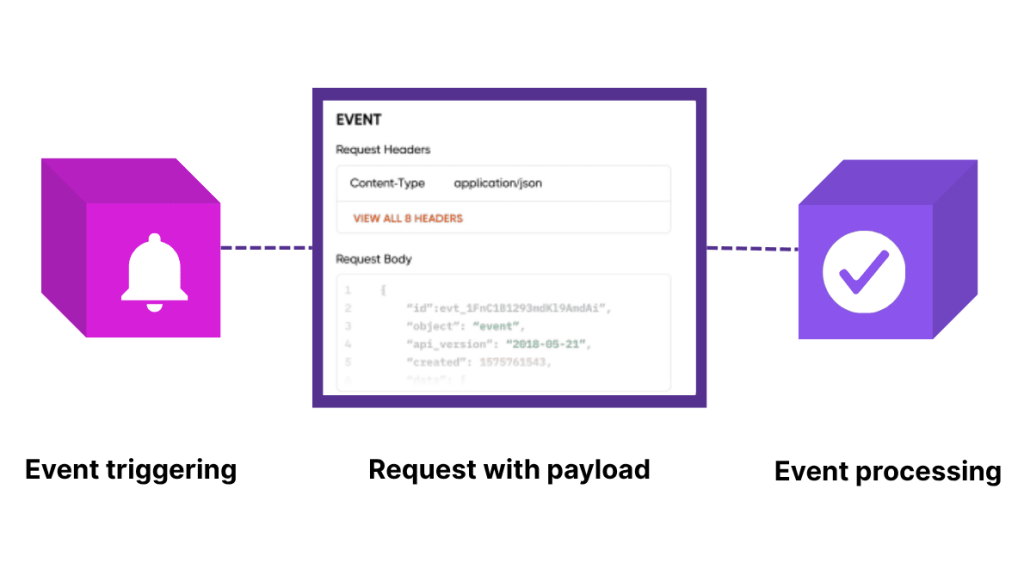
Modern Realtime Salesforce Integrations are built by combining event-driven webhooks, lightweight JSON payloads, REST APIs for two-way communication, and Apex logic for handling custom scenarios. These elements create a resilient, real-time data pipeline capable of syncing large-scale enterprise systems. Our architects at iBirds Software Services leverage this architecture to ensure your systems remain aligned without unnecessary load or maintenance.
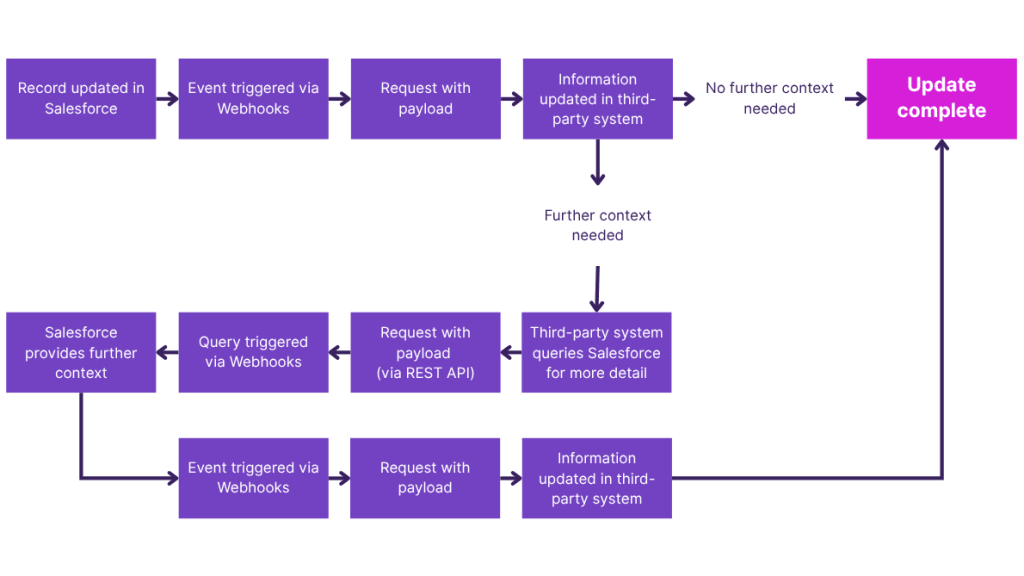
How Declarative Webhooks Simplifies Integration
Declarative Webhooks provides a Salesforce-native foundation for building instant, bidirectional integrations using configuration-driven tools. Admins can assemble high-performing pipelines with clicks, while developers fine-tune custom logic in Apex where required. For organizations working with iBirds Software Services, this approach eliminates dependency on external middleware, reduces compliance concerns, and accelerates integration delivery timelines.
Benefits of Realtime Salesforce Integrations
With a well-designed setup, teams gain immediate visibility into system updates, eliminate redundant manual work, and operate confidently with consistent information across platforms. Real-time pipelines also improve compliance because data stays within Salesforce. iBirds Software Services ensures that each integration is built for scale, low resource usage, and long-term stability, supporting your operational and compliance goals.
Final Thoughts
Realtime Salesforce Integrations help businesses move beyond delayed workflows and fragmented data. With event-driven, Salesforce-native architecture and expert implementation from iBirds Software Services, organizations can maintain accurate, live data across every connected system—boosting productivity, decision-making, and customer experience.
More Info : Linkedin
FAQs about for real time salesforce integrations
Q1. What are Realtime Salesforce Integrations?
These are connections between Salesforce and other systems that allow data to synchronize instantly, ensuring updates are reflected across platforms in real time.
Q2. Why are real-time integrations important?
They maintain accurate, up-to-date information across all systems, preventing errors and helping teams make decisions based on the latest data.
Q3. Which systems can integrate with Salesforce in real time?
Accounting tools, ERPs, payment platforms, SaaS applications, and custom proprietary systems can all be connected for continuous, automated data flow.
Q4. How do event-driven updates improve integrations?
Event-driven updates immediately push changes when data is modified, reducing delays, minimizing manual work, and keeping all systems in sync.Q5. Can Realtime Salesforce Integrations improve compliance?
Yes, by keeping data within the Salesforce ecosystem and avoiding off-platform storage, they reduce compliance risks and protect sensitive information.