
Artificial intelligence is creating a major change in the Salesforce ecosystem. The latest Salesforce AI adoption trends show that different Salesforce professionals are using AI tools in different ways based on their daily tasks and business needs.
One important point seen across Salesforce roles is the difference between Salesforce Admins and Developers using AI. Salesforce Developers are adopting artificial intelligence faster because many AI-powered Salesforce tools directly support coding, testing, and development tasks. Salesforce Admins are also using AI, but the adoption speed is slightly different because their work depends more on configurations, automation, and managing business processes.
This difference raises an important question: why are developers moving faster with AI, and how can admins use these technologies more effectively? Understanding this gap helps businesses improve productivity, use Salesforce automation better, and prepare their teams for the future of AI in CRM.
For businesses planning smarter CRM processes, professional Salesforce Consulting Services can help teams use AI solutions, automation, and Salesforce tools in a more effective way.
What the Survey Tells Us
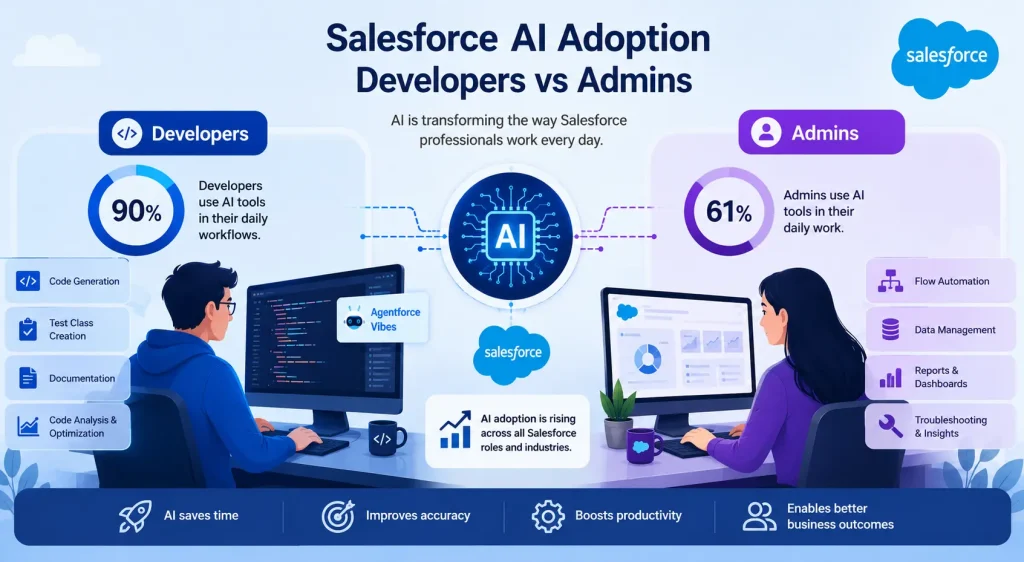
Recent Salesforce industry reports show that artificial intelligence has quickly become a common part of daily work for many Salesforce professionals. Before advanced AI platforms became widely available, the use of AI in Salesforce roles was very limited. Now, admins, developers, architects, and consultants are using AI-powered solutions to complete different types of tasks.
The level of Salesforce AI adoption is not the same across every role. Developers are using artificial intelligence tools more frequently because many solutions are designed around coding, metadata, and technical workflows. Reports show that a large number of Salesforce Developers use some type of AI assistance in their regular development process.
With Salesforce tools like Agentforce Vibes, developers can improve their workflows by allowing AI to manage repetitive tasks. AI can support developers with code analysis, documentation, testing, and understanding existing development structures faster. This gives developers more time to focus on complex problems that require technical planning and decision-making.
Salesforce Admins, however, have shown a slower adoption rate compared to developers. One reason is that many AI tools are more focused on code-based tasks, while admins usually work with clicks, configurations, Salesforce automation, and data management. Tools like ChatGPT and Gemini can support general tasks, but they may not always understand a company’s Salesforce org, custom processes, or business requirements.
Admins can still get strong benefits from artificial intelligence in Salesforce by using it for documentation, workflow planning, automation ideas, and improving productivity. The adoption gap does not mean admins have fewer opportunities. It simply shows that AI tools need to match the way Salesforce Admins work.
Companies that want to improve Salesforce efficiency can use Salesforce Implementation Services to set up better CRM structures, automation processes, and AI-ready solutions.
How Developers Leverage AI
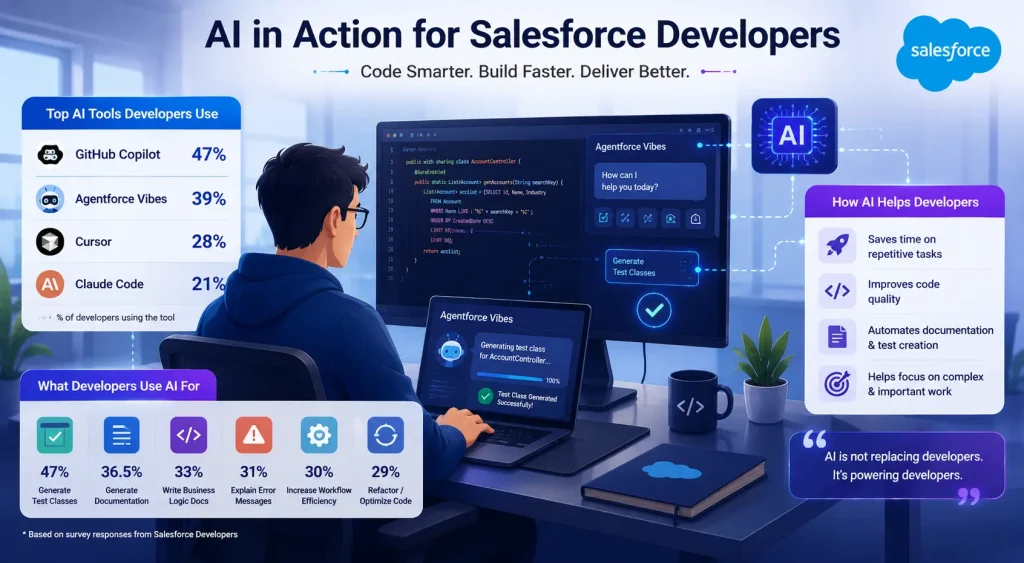
Salesforce Developers now have access to many AI-powered tools that help them complete development tasks with better speed and accuracy. The growth of artificial intelligence in Salesforce has provided developers with different solutions that support coding, testing, documentation, and workflow improvements.
Tools like GitHub Copilot, Agentforce Vibes, Cursor, and Claude Code have become popular among developers because they help reduce repetitive work. These AI tools for Salesforce professionals can assist with writing code, checking errors, improving existing solutions, and managing complex development tasks.
One of the biggest areas where Salesforce Developers use AI is test class generation. Creating test classes can take a large amount of time during development, and AI assistance helps developers prepare test structures faster. Along with this, developers also use artificial intelligence tools to generate technical documentation for their projects.
AI-generated documentation allows developers to spend more time on building quality solutions instead of spending hours writing supporting documents. These tools can also help create business logic documents, explain error messages, improve workflows, and refactor or optimize code.
However, developers are not completely replacing their work with AI. Most Salesforce Developers use artificial intelligence as a support system to handle repetitive activities while they focus on advanced development, problem-solving, and creating better Salesforce solutions.
Businesses that want to build custom Salesforce solutions can improve their processes with Salesforce Development Services, helping them create scalable CRM features, automation, and integrations according to their needs.
Why Admins Use AI Less Than Developers
One major reason behind the difference in Salesforce Admins vs Developers AI adoption is the type of tools available for both roles. Many modern AI tools are designed around development activities like coding, metadata management, and technical improvements. Salesforce Admins usually work with clicks, configurations, reports, permissions, automation, and user management.
A strong example of AI support for admins is Einstein for Flow. This tool helps Salesforce Admins work with Flow Builder more efficiently by using AI assistance. Admins can use it to create Salesforce Flows, understand automation logic, and troubleshoot existing processes.
Einstein for Flow shows how artificial intelligence can make Salesforce administration easier, but access and availability of some advanced AI tools can affect adoption. Developers often have easier access to AI coding assistants, while admins may require more Salesforce-specific AI solutions designed around their daily tasks.
This does not mean Salesforce Admins are avoiding AI. Many admins already use AI-powered Salesforce tools to create documentation, improve productivity, understand errors, plan automation, and manage business processes.
The main difference is how AI fits into their workflow. Developers have more direct AI use cases because of coding tasks, while admins are gradually finding more ways to include AI in Salesforce administration.
Organizations can improve admin productivity and automate business operations by using Salesforce Automation Services to build smarter workflows and reduce manual processes.
How Can Admins Use AI in New Ways
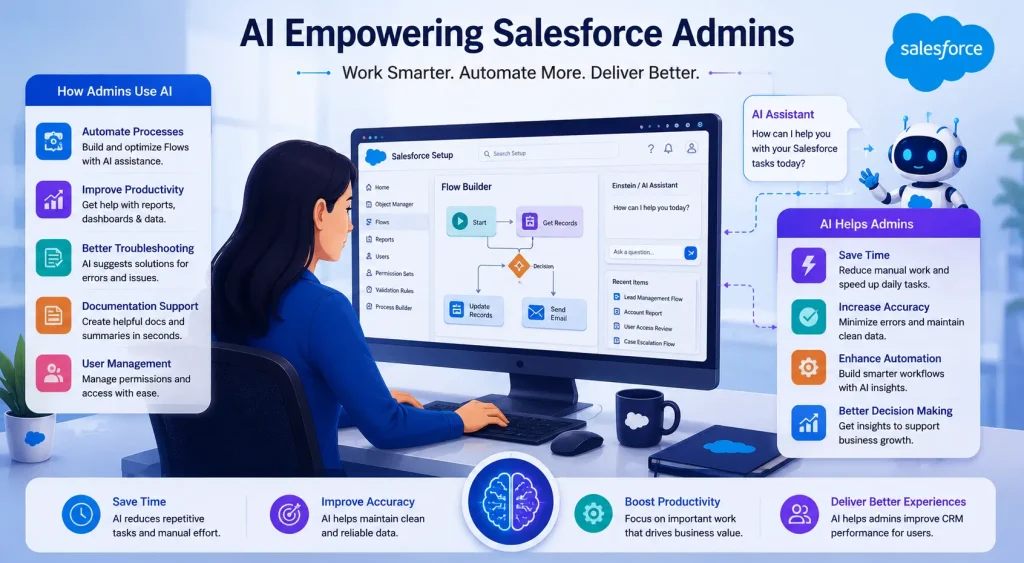
Salesforce Admins have many opportunities to use artificial intelligence in their daily tasks and improve the way they manage Salesforce platforms. As AI tools continue to improve, admins can use these solutions to save time, manage workflows, and handle business requirements more effectively.
One useful tool for Salesforce Admins is Agentforce Vibes. While it provides many helpful features, admins need to understand how AI works before depending on every result. Artificial intelligence does not work like human thinking. It reviews patterns, data, prompts, and available information to create the most suitable response.
Agentforce Vibes can support Salesforce professionals, but it still requires proper review and guidance. Admins can use AI assistance for understanding configurations, improving documentation, finding solutions, and getting support with Salesforce-related tasks. Better prompts and clear instructions can help admins receive more accurate outputs from AI-powered Salesforce tools.
Another valuable area for admins is Agentforce powered by Setup. This can help Salesforce Admins complete administrative activities faster, improve troubleshooting, and simplify regular platform management tasks.
AI should be used as a productivity tool that supports admins instead of replacing their role. Salesforce Admins can combine their business knowledge with AI solutions to improve automation, user experience, and CRM performance.
Companies looking to improve their Salesforce environment can use Salesforce Managed Services to maintain, optimize, and improve their CRM platform with expert support.
What Will Future Surveys Tell Us?
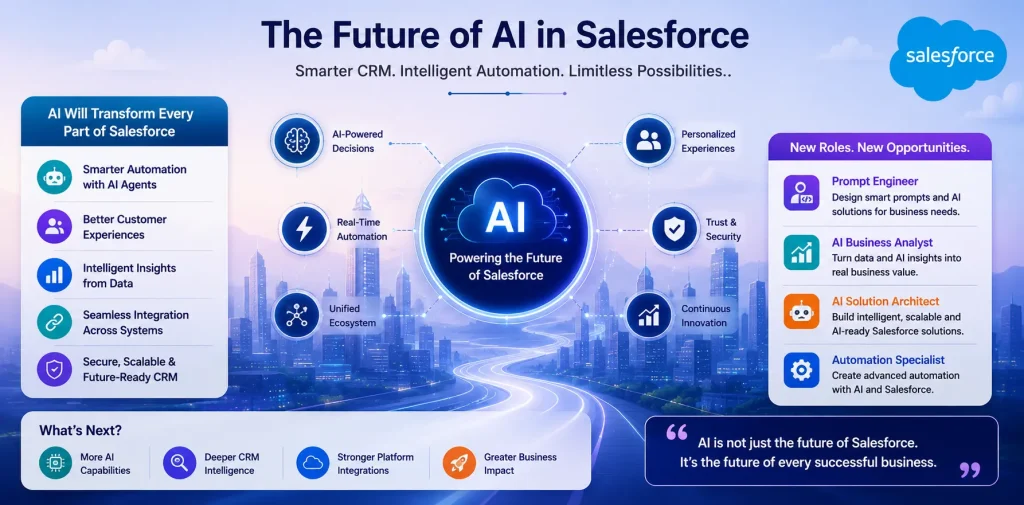
The future of Salesforce AI adoption will continue to grow as more professionals understand the value of artificial intelligence. Developers will continue using tools like Agentforce Vibes, GitHub Copilot, and other AI assistants as these solutions become more advanced and useful for daily development activities.
Salesforce Developers will find more ways to use AI for code optimization, documentation, testing, and workflow improvements. As AI tools become smarter, they will help development teams reduce repetitive work and focus more on creating better Salesforce solutions.
Salesforce Admins will also get more AI-powered features designed around administration, automation, and CRM management. More tools may become available that help admins work with Salesforce Flows, reports, permissions, and business processes without depending on complex technical steps.
The growth of artificial intelligence in Salesforce will also create new career opportunities. Along with traditional roles like Salesforce Admin, Developer, and Architect, businesses are already seeing demand for roles such as Prompt Engineer and AI Business Analyst.
As AI becomes a bigger part of the Salesforce ecosystem, professionals who understand both Salesforce and artificial intelligence will have more opportunities to support business growth.
Businesses preparing for the future of CRM can use Salesforce Integration Services to connect platforms, improve data flow, and build stronger AI-ready Salesforce systems.
Summary
Artificial intelligence is changing how Salesforce professionals complete their daily work. Developers are currently adopting AI tools faster because many solutions directly support coding, testing, documentation, and technical improvements.
Salesforce Admins are also increasing AI adoption by using these tools for productivity, automation planning, documentation, and better platform management. The difference between Salesforce Admins and Developers AI adoption mainly comes from available tools and how each role works.
AI is not replacing Salesforce professionals. It is becoming a support system that helps admins and developers save time, reduce repetitive tasks, and focus on important business problems.
As Salesforce continues adding more AI-powered solutions, both admins and developers will find new ways to use artificial intelligence for better CRM performance, smarter workflows, and improved customer experiences.
Organizations that want to prepare their Salesforce platform for AI-driven growth can choose Salesforce AI Services to build smarter, more efficient, and future-ready CRM solutions.
FAQs
1. How is AI used in Salesforce?
AI in Salesforce is used to automate tasks, analyze data, improve workflows, create documentation, and support customer management. Salesforce AI tools help admins and developers save time and work more efficiently.
2. What are the best AI tools for Salesforce professionals?
Some commonly used AI tools for Salesforce professionals include Agentforce Vibes, Einstein AI, GitHub Copilot, Cursor, and Claude Code. These tools support coding, automation, documentation, and productivity improvements.
3. Why do Salesforce Developers use AI more than Admins?
Salesforce Developers use AI more because many AI tools directly support coding, testing, error fixing, and development tasks. Salesforce Admins use AI differently for automation, documentation, and platform management.
4. Can Salesforce Admins use AI without coding knowledge?
Yes, Salesforce Admins can use AI without coding skills. AI-powered Salesforce tools can help admins with Flow Builder, reports, documentation, troubleshooting, and daily administrative work.
5. Will AI replace Salesforce Admins and Developers?
AI will not completely replace Salesforce Admins and Developers. It works as a support tool that helps professionals reduce manual tasks and focus on complex business requirements.
6. How does Agentforce help Salesforce users?
Agentforce helps Salesforce users improve productivity by supporting automation, workflows, troubleshooting, and different CRM tasks. It allows teams to complete work faster with AI assistance.
7. What is the future of AI in Salesforce?
The future of AI in Salesforce will focus on smarter automation, better CRM management, and new roles like Prompt Engineer and AI Business Analyst. More Salesforce professionals will use AI to improve their daily work.