

A Cloudflare outage temporarily affected access to several well-known online platforms, including ChatGPT, X, AWS-powered applications, Spotify, and many other web services. The first reports of the incident appeared around 11:48 AM UTC, with users facing connection failures, error pages, and login issues across different regions. According to status updates, most core services began recovering after several hours, although some users continued to report intermittent issues.
Cloudflare is one of the world’s largest content delivery networks (CDN) and security providers, supporting a significant portion of websites and web applications. Since millions of businesses rely on its network for website performance, DNS, security, and traffic management, even a short Cloudflare service disruption can affect websites, SaaS platforms, APIs, and enterprise applications worldwide. For organizations building highly available digital solutions, working with experienced Salesforce Consulting Services can help create resilient architectures that reduce the impact of third-party service interruptions.
Timeline of Events
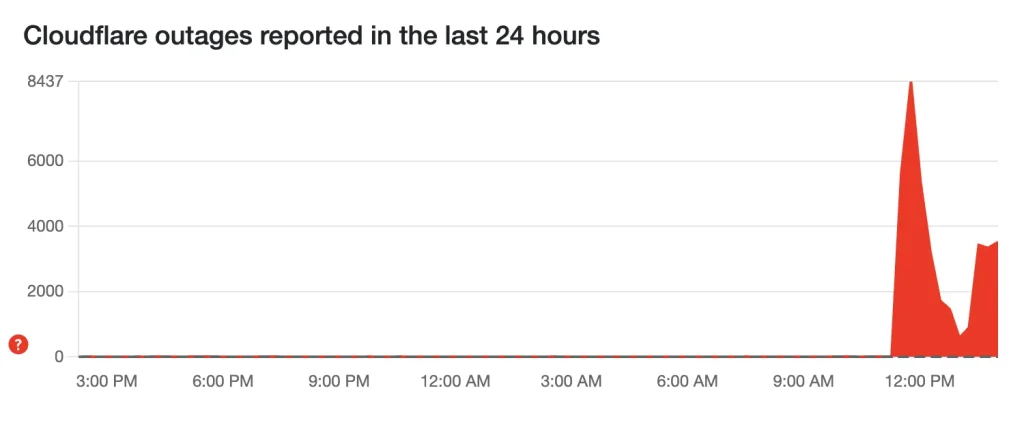
The timeline below summarizes the major updates shared during the Cloudflare outage. All times are listed in UTC (Coordinated Universal Time).
- 11:48 UTC: Cloudflare confirmed that it was experiencing an internal service issue affecting parts of its network.
- 12:21 UTC: The company reported that several services were gradually recovering, but users could still experience elevated error rates while engineering teams continued restoration work.
- 13:04 UTC: Access to Cloudflare WARP was temporarily disabled in London. WARP is the company’s VPN and secure DNS service that routes internet traffic through Cloudflare’s global network.
- 13:09 UTC: Cloudflare announced that engineers had identified the root cause of the disruption and had begun rolling out a corrective update.
- 13:13 UTC: The company confirmed that Cloudflare Access and WARP services had largely recovered, with error rates returning close to normal operating levels.
- 13:35 UTC: Restoration efforts shifted toward application services, as technical teams worked to recover affected customer workloads across multiple regions.
- 13:46 UTC: Cloudflare released an official update explaining that an unexpected surge in traffic triggered errors across part of its infrastructure. The company also stated that investigations were continuing to determine why the unusual traffic occurred.
- 14:34 UTC: Dashboard functionality was restored after additional configuration changes, while work continued to stabilize application-related services.
- 14:42 UTC: Cloudflare announced that a fix had been fully deployed and indicated that the primary incident had been resolved. Teams continued monitoring network performance to confirm service stability.
- 14:57 UTC: Some users still reported issues accessing the Cloudflare dashboard. The company acknowledged these reports and continued working on the remaining login-related problems.
- 15:40 UTC: Another progress update confirmed that engineers were focused on resolving post-deployment issues and reducing the impact of any remaining service interruptions.
- 16:27 UTC: Cloudflare stated that latency and error rates had improved significantly across its network, although a limited number of customers could still experience isolated issues while the recovery process was completed.
Organizations that depend on cloud platforms should maintain resilient application architectures and disaster recovery strategies. Implementing reliable Salesforce Development Services can help businesses build scalable Salesforce solutions that remain dependable even when third-party infrastructure providers experience temporary service disruptions.
What Is Causing the Outage?
Cloudflare has confirmed that the underlying cause of the outage has been identified, but the company has not publicly shared the technical details. Until an official post-incident report is released, the exact reason behind the disruption remains unknown.
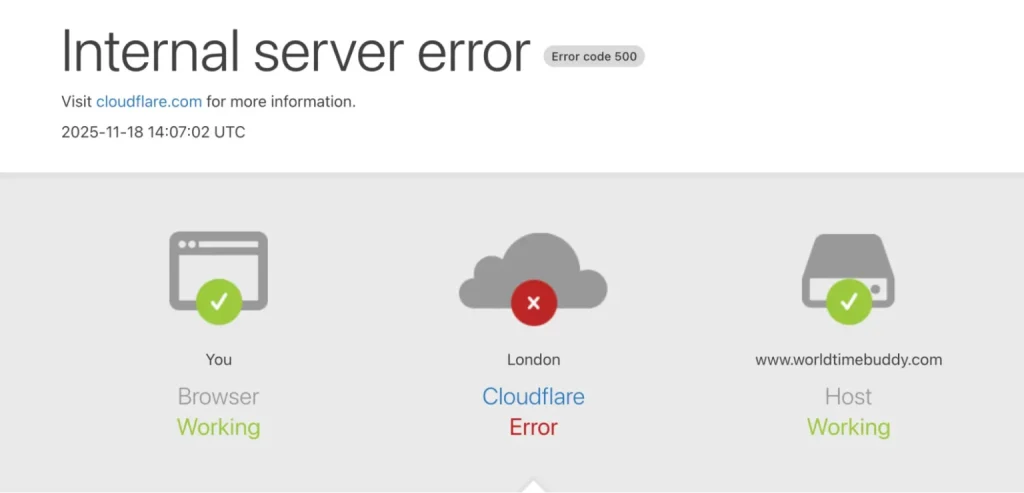
During the outage, many users attempting to access affected websites reported messages such as “Please unblock challenges.cloudflare.com to proceed,” gateway failures, timeout notifications, and internal server errors. These issues prevented users from accessing websites and cloud-based applications that depended on Cloudflare’s network infrastructure.
Although the full scale of the incident has not been confirmed, the disruption appears to have impacted a wide range of online services across different industries. Even outage monitoring platforms experienced temporary accessibility issues, making it more difficult for users to verify the status of affected websites.
Summary
The Cloudflare outage temporarily disrupted access to several major online platforms, highlighting how dependent modern digital services have become on global cloud infrastructure providers. While the primary issue has been resolved and services have largely returned to normal, Cloudflare continues to review the incident and monitor network stability.
Businesses that rely on cloud applications should regularly review their continuity planning, system monitoring, and recovery processes. Working with experienced Salesforce Managed Services providers can help organizations maintain stable Salesforce environments, respond quickly to unexpected infrastructure events, and reduce operational risks during future service disruptions.
FAQs
1. What was the Cloudflare outage?
The Cloudflare outage was a temporary service disruption that affected websites and online applications using Cloudflare’s content delivery network (CDN), DNS, and security services. During the incident, many users experienced connection failures, error pages, and login issues.
2. Which websites were affected by the Cloudflare outage?
Several popular online platforms experienced temporary disruptions, including ChatGPT, X, Spotify, AWS-powered applications, and many other websites that rely on Cloudflare’s global infrastructure. The overall number of affected websites has not been officially confirmed.
3. What caused the Cloudflare outage?
Cloudflare stated that its engineering team identified the cause of the incident, but the company has not publicly shared the complete technical details. A detailed post-incident report may provide additional information after the investigation is complete.
4. How long did the Cloudflare outage last?
According to Cloudflare’s status updates, the primary disruption lasted for several hours. While most services recovered during the same day, a small number of users continued experiencing intermittent issues until restoration activities were completed.
5. Why did users see Cloudflare error messages during the outage?
Many users received messages such as internal server errors, connection failures, or requests to unblock Cloudflare challenges because traffic could not be processed correctly while parts of Cloudflare’s network were experiencing service degradation.
6. Did the Cloudflare outage affect Salesforce applications?
Salesforce itself was not the direct cause of the incident. However, Salesforce applications or integrations that depend on Cloudflare-enabled services, APIs, websites, or authentication systems could experience temporary connectivity issues.
7. How can businesses reduce the impact of future cloud service outages?
Organizations should implement business continuity planning, infrastructure monitoring, backup strategies, and application redundancy wherever possible. Regular system reviews and proactive Salesforce support can also help minimize operational disruptions during third-party service incidents.
8. Why is Cloudflare important for websites and web applications?
Cloudflare helps improve website performance, security, DNS resolution, and traffic management through its global network. Because many businesses depend on these services, even a temporary Cloudflare outage can affect websites, APIs, SaaS platforms, and enterprise applications across multiple regions.